

Nihar

Open to Work

Practice Contact

Case Study 02 of 04

CARB logo

CARB-CARL ISR Web Application

SectorGovernment / Environmental RoleUX Designer Year2022
CARB-CARL application screens

The problem we were solving

California is committed to reducing pollution across the state, in part by offering grants that help companies upgrade old, high-emission machinery to newer, cleaner equipment. CARB needed a web application that could support that effort — helping the state track emissions data while making it easier for regulated businesses to apply for and manage those grants.
My Role

As the main UX Designer, I was the primary advocate for the user at every step of the process. That was harder than it sounds: we'd requested access to speak with real users before the project began and weren't able to get it, so every decision had to be well-informed enough that I could make the right call on their behalf.

Requirements Gathering

Requirements gathering happened in two parts — meetings with stakeholders, then turning what we learned into documentation.

Requirements meetings
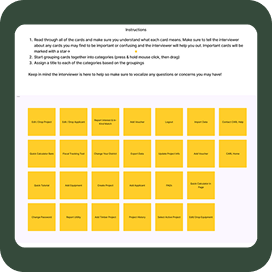
My main goal was to be extremely thorough, so nothing would surprise us once we reached the design stage. My team guided stakeholders through about 2–3 weeks of requirements meetings, and I also ran a card sorting exercise with a few of them, which helped us understand the overall structure the site needed.
Documentation
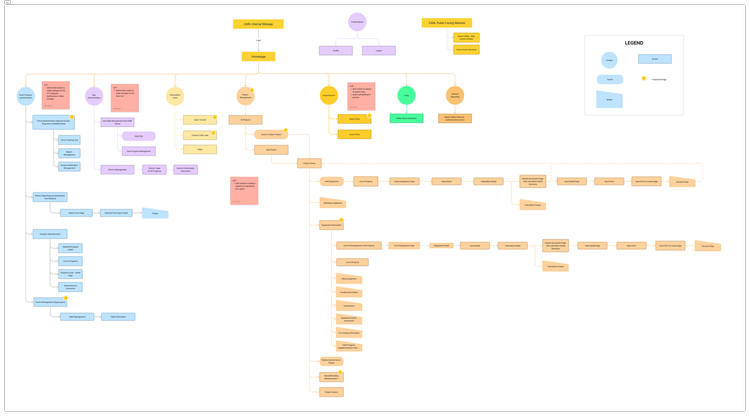
Once the meetings wrapped, we moved into documentation. I owned the Information Architecture, Site Map, and User Journey Flows outright, and helped teammates with the System Requirements Specification and with presenting key design decisions.

New Information Architecture

Solving for Scope Creep

The problem
Getting stakeholders to formally sign off on the requirements documentation was harder than expected — they kept changing their minds on their needs & wants, which caused immense scope creep.
The solution
We let them know the requirements phase was closing soon and gave them a deadline of a week to submit any more requests or comments. That bit of urgency was enough to expedite sign-off and close out the phase.

Design Stage

Near the end of the requirements stage, we moved into design — creating style guides, components, iconography, and low-fidelity versions of shared elements like menus, headers, and footers.

We wanted the client to approve these foundational pieces before applying them anywhere else. Since they'd repeat across nearly every page, getting sign-off early meant the whole application would end up with one unified look and feel.

Key Challenges

No direct access to users
The biggest challenge was not being able to talk to the people who'd actually use this system, which made it harder to design something genuinely user-friendly. We got as close as we could by talking extensively with the client about user needs, which gave us a solid, if indirect, read on who we were designing for.
A fully async, distributed team
I was the only team member based in the U.S. — the rest of the design team worked out of India. That meant working asynchronously most of the time, where even a simple idea could take up to 24 hours just to communicate properly. I tried to close that gap with detailed written notes and dedicated sync meetings to keep the whole team on the same page.

B2B Tools require meticulous thought -- balancing detailed rules & user needs can prove to be difficult.

The outcome

~ 3,000

Warehouses required to report data due to the Indirect Source Rules

44

% of Californians living in the South Coast AQMD Air Basin